HydraFacial Benefits: What It Does and Who It Suits
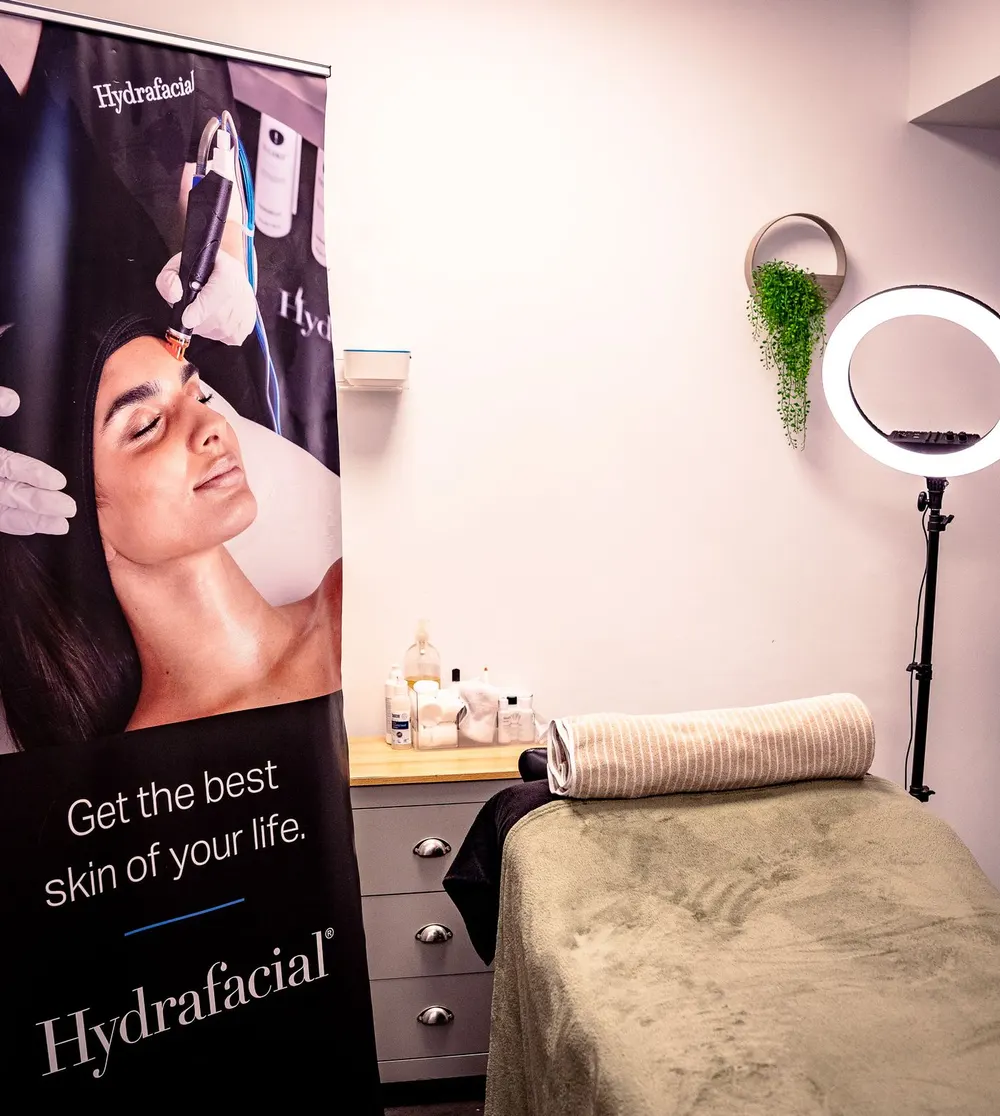
The main benefit of a HydraFacial is that it cleanses, exfoliates and hydrates skin in one appointment, with no needles, no peeling and no downtime, so you walk out with visibly brighter, smoother skin the same day. It suits most skin types, including sensitive and acne-prone skin, because nothing about the treatment is abrasive. What it will not do is fix deep acne scarring or significant pigmentation on its own, and the results fade within about a week unless you keep it up. HydraFacial runs at our Clifton Down salon only, inside Clifton Down Shopping Centre on Whiteladies Road.
What does a HydraFacial actually do?
A HydraFacial works through a patented vortex tip that does four jobs in sequence during a single session.
| Step | What happens |
|---|---|
| Cleanse and exfoliate | The tip lifts away dead skin cells and surface debris, the same groundwork any good facial starts with |
| Gentle acid peel | A mild glycolic and salicylic blend loosens whatever is sitting inside the pores. Chemical peels range widely in strength and recovery time, as the American Academy of Dermatology explains, and this is the gentle end, without the redness or peeling of a stronger peel |
| Vortex extraction | Suction through the same tip physically lifts blackheads, oil and congestion out of the pore, without the manual squeezing a facialist's fingers would need |
| Hydrating infusion | Serums containing hyaluronic acid, antioxidants and peptides are pushed into the skin while the pores are still open from the extraction step |
Nothing in that sequence involves a needle or a mechanical scrape, which is why HydraFacial tolerates sensitive and reactive skin better than most active treatments. Your therapist adjusts the strength of each step to your skin on the day, so oily, congested skin and dry, dehydrated skin get different settings rather than one generic pass.
The benefits, specifically
- Same-day results. Skin looks brighter and feels smoother within hours, not days. This is the treatment's real point of difference against a chemical peel or microneedling, both of which need recovery time before you see the payoff.
- No downtime. Makeup goes straight back on. There is no flaking, no visible redness to plan around, and no reason to avoid a work day or a night out afterwards.
- Deep pore cleansing without manual extraction. Vortex suction removes blackheads and congestion more gently than a facialist's fingers, so there is less redness and irritation afterwards.
- Hydration that actually absorbs. Serums go in while the pores are clear, rather than sitting on top of congested skin doing very little.
- Broad suitability. Oily, dry, sensitive and acne-prone skin can all be treated, with the settings adjusted rather than the treatment withheld.
Is HydraFacial worth the money?
For what it is built to do, cleansing, exfoliating and hydrating in one low-risk session, yes. Most people notice brighter, smoother skin the same afternoon, and that alone makes it a reasonable choice before an event or as a monthly reset.
Where it stops being worth it is if you are expecting it to do a stronger treatment's job. HydraFacial will not rebuild deep acne scarring the way microneedling can, and it will not shift significant pigmentation the way a targeted peel or IPL will. It is genuinely excellent at what it does, which is maintenance and immediate glow, not correction of an established skin concern. If that is what you are trying to fix, ask about microneedling or Jan Marini peels instead, both of which reach deeper into the skin at the cost of some recovery time.
Cost also factors into "worth it". A single session buys a noticeable but temporary result, and the better return usually comes from booking it as a monthly habit rather than a one-off. For current pricing across the three HydraFacial tiers, see our price list.

What are the downsides of HydraFacial?
Three honest limits, since a post that only lists benefits is not much use to you.
It is maintenance, not a fix. Results sit at their best for roughly five to seven days before normal skin turnover starts to fade them. That's why people book one before a wedding or a big week at work rather than expecting it to hold for a month untouched.
It will not touch deep concerns on its own. Significant acne scarring, established pigmentation or noticeable skin laxity need a treatment that works below the surface, not one built around a gentle peel and extraction. HydraFacial is the polish, not the structural repair.
It is not right during certain flare-ups. Active infected acne, an open skin infection, or a current flare of a condition like eczema or rosacea usually means waiting rather than booking. Your therapist will check your skin before starting and tell you honestly if now is not the moment, which is a normal part of the appointment rather than a reason for concern.
Which age is best for a HydraFacial?
There is no correct age, and the clinic does not set one. As a general pattern across facial skin treatments, though, HydraFacial tends to suit different concerns at different life stages rather than one age bracket.
Clients in their twenties often reach for it to manage congestion, oiliness and the odd breakout, treating it as a monthly reset rather than a corrective treatment. In your thirties and forties, the same session can do double duty: the extraction handles congestion while the hydration infusion works on early fine lines and dullness. Later in life it tends to suit people well as a low-impact way to keep skin hydrated and bright between more active treatments, since it never asks for downtime a busier calendar cannot accommodate. None of this is a fixed rule, just a general shape, so treat it as a starting point rather than a prescription.
If you are unsure whether it is right for your skin at your current stage, your therapist can advise at booking.
HydraFacial aftercare
Because nothing in the treatment is abrasive, aftercare is light.
- Makeup can go on immediately, there is no waiting period.
- As a general rule of thumb rather than a clinic-specific instruction, it is worth skipping strong actives, retinol and exfoliating acids for 24 to 48 hours, since skin is slightly more receptive than usual straight after the peel and extraction steps. Ask your therapist if you are unsure about a specific product.
- Wear SPF the next day as you normally would, at least factor 30 as NHS guidance recommends for any exposed skin. The treatment does not make skin sun-sensitive the way a stronger peel does, but freshly cleared pores are still worth protecting.
- Keep drinking water and using your normal moisturiser. The infusion step gives hydration a head start, and your own routine keeps that going.
- If you noticed congestion or blackheads were the main thing HydraFacial improved for you, our post on does HydraFacial remove blackheads goes into that specific question in more depth.
How long does a HydraFacial last?
The brightness and hydration peak in the first day or two and stay strong for about five to seven days before gradually fading back towards your normal baseline. That window is why HydraFacial works best when booked deliberately: about a week before a wedding, an event or simply a week you want to look and feel your best.
For ongoing results rather than a one-off boost, monthly sessions are the usual rhythm. Each one keeps pores clear and hydration topped up before the last session's effect has fully worn off, which compounds over several months into skin that generally looks better even on the days between appointments.
FAQ
Is HydraFacial worth the money? For what it is built to do, cleansing, exfoliating and hydrating in one low-risk session, yes. It will not replace a stronger treatment for deep scarring or pigmentation, but as a same-day glow with no downtime it earns its place.
What does HydraFacial actually do? It cleanses, exfoliates, applies a gentle acid peel, extracts congestion through vortex suction, then infuses hydrating serums, all in one appointment with no downtime.
What are the downsides of HydraFacial? Results last roughly five to seven days rather than weeks, it will not resolve deep scarring or significant pigmentation on its own, and it is not suitable during an active flare of certain skin conditions.
Which age is best for a HydraFacial? No single age. It suits congestion and oiliness in your twenties, combined concerns through your thirties and forties, and low-impact hydration and brightness later on.
How long does a HydraFacial last? Results peak in the first couple of days and hold for about five to seven days before fading. Monthly sessions keep the effect topped up.
HydraFacial runs exclusively at our Clifton Down salon, Unit 1, Clifton Down Shopping Centre, 135 Whiteladies Road, Redland, BS8 2NP. See the HydraFacial treatment page for the full breakdown of tiers and to book.