Dermaplaning gives you brighter, smoother skin the same day, makeup that goes on without catching, and skincare that finally absorbs instead of sitting on top. It works by mechanical exfoliation with a sterile surgical blade, so there are no acids and no downtime, which makes it a genuine option if chemical exfoliants aren't for you. And no, it does not make hair grow back thicker, darker or faster. That's a myth, and once you understand what the blade actually does to a hair, it's easy to see why.
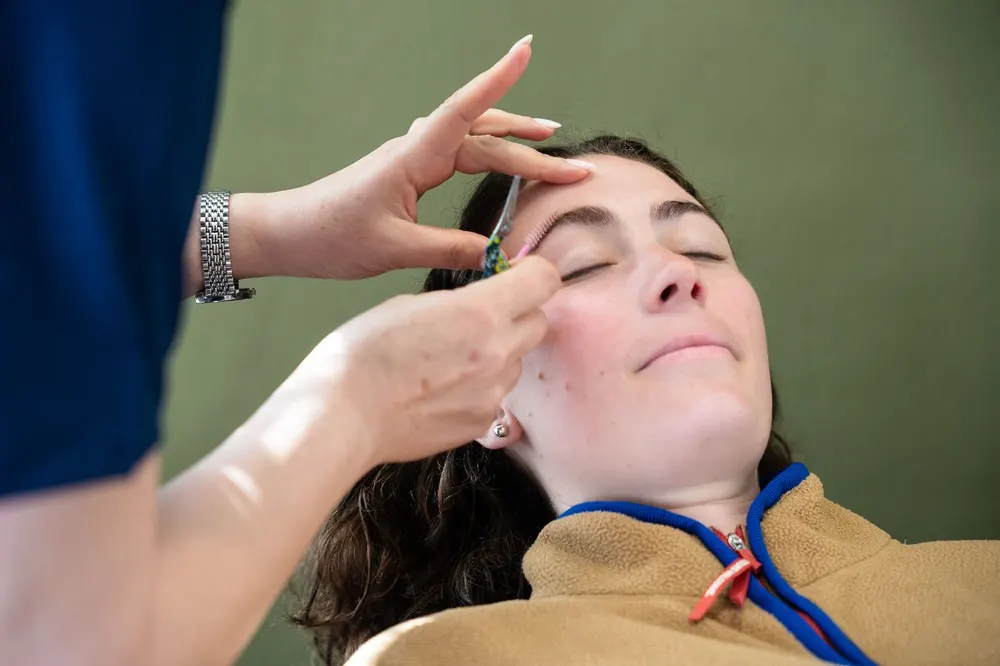
What dermaplaning actually does
Your therapist uses a sterile surgical blade, held at a shallow angle, to sweep away the top layer of dead skin along with the fine vellus hair (the soft, colourless "peach fuzz") on your face. Both come off in the same pass. That's what makes dermaplaning different from most other exfoliation methods: one treatment handles dead skin and hair removal together, rather than needing separate products or sessions for each.
The results show immediately. Skin looks brighter and feels smoother the moment you sit up. Makeup applies more evenly because it isn't catching on dry patches or fine hair, and skincare products absorb properly instead of sitting on a layer of dead skin cells. Because it's mechanical rather than chemical, there's no peeling, no purging and no downtime to plan around, which is why it suits people who find retinoids or acid peels too harsh for their skin.
Results are same-day, so a single booking makes sense rather than committing to a course upfront. Dermaplaning at Skin & Beauty Box runs at our Westbury on Trym salon (16 High Street, BS9 3DU) only, so that's the branch to book regardless of which of our three Bristol locations is closest to you.
Does dermaplaning grow back stubbly? The regrowth myth, explained
No, and this is worth explaining properly rather than just asserting it. Hair thickness, colour and growth rate are all set by the follicle, the structure under the skin where a hair actually grows from. Dermaplaning never touches the follicle. The blade works on the surface, cutting the hair shaft where it exits the skin, in much the same way trimming the ends of your hair doesn't change what grows out of your scalp.
So the vellus hair on your face grows back precisely as it was before: the same fine, soft, often colourless hair, at the same rate. What changes for a few days is how it feels, not how it grows. A hair that tapers naturally to a fine point feels soft to the touch. A hair with a blunt, cut end (from a blade, scissors or a razor) feels coarser for a short while, simply because you're now feeling a flat-cut tip instead of a tapered one. That's the entire mechanism behind the idea that dermaplaning makes hair grow back thicker: it doesn't, because nothing about the follicle ever changes. Cleveland Clinic explains the same effect after shaving: the hair looks and feels different for a while because you're seeing the cut base rather than the tapered tip, not because the follicle has changed anything about how it grows.
Does peach fuzz grow back stubbly after dermaplaning? By the same logic, no. Peach fuzz is vellus hair, and everything above applies to it directly. Any stubble-like feeling in the days after treatment is about the cut end, not a different hair growing in.
Is dermaplaning actually good for your face?
For the right skin, yes. Dermaplaning suits dull, congested-looking skin, uneven texture, and the common complaint of makeup that never quite sits right no matter what goes underneath it. It's also a solid option if you want exfoliation without the redness or purging that acids and retinoids can cause, since nothing chemical is involved.
It has limits worth knowing before you book. Dermaplaning is a surface treatment: it won't shift acne scarring, soften wrinkles caused by muscle movement, or reach the deeper skin changes that microneedling or a chemical peel are built for. Think of it as a thorough clean and smooth rather than a transformation, and it earns its place doing exactly that.
It's also not suitable for everyone. These are reasons to skip it, at least for now:
- Active acne
- Rosacea
- Diabetes
- Skin cancer
- Broken or reactive skin
Everyone booking in completes a consent form first. If anything about your skin looks like it might fall into one of those categories, or a mark has changed recently and you're not sure what it is, that's a conversation for the consultation, or your GP, before any blade goes near your face.
What is the downside to dermaplaning?
The main one is exactly what you'd expect from a treatment that uses a blade: a small nick or scrape, similar to what you might get shaving with a razor. It's uncommon and minor when it happens, but it's the honest answer to what could go wrong.
Beyond that, some people with sensitive skin get mild redness for 12 to 24 hours afterwards, which settles on its own. There's no real recovery time and no product restrictions once that settles. Add it up and that's the full list: a possible minor nick, brief redness in sensitive skin, and the contraindications above, with no hidden catch beyond that.
Does dermaplaning hurt?
No. The blade creates a light scratching sensation as it moves across your skin, and most people find it oddly relaxing rather than uncomfortable. If your skin is sensitive, you might notice a slight prickle in places, but nothing sharp or painful. There's no numbing needed and nothing to brace for.
Dermaplaning aftercare
Aftercare is minimal, which is part of the appeal. Makeup is fine to apply straight away, just use clean brushes and sponges so you're not introducing bacteria to skin that's just been freshly exfoliated. If you get any redness, give it 12 to 24 hours to settle before judging the result.
The one rule worth actually following is spacing: leave four to six weeks between sessions. Skin needs that time to fully recover and rebuild the layer it just had removed. Booking again sooner doesn't get you better results. It just re-exfoliates skin that hasn't had time to recover, which irritates it and works against what you booked the treatment for in the first place.
Because results are same-day and there's no cumulative benefit that builds over a course the way microneedling or peels do, a single session makes sense rather than committing upfront to a block booking. Pricing varies by clinic and region, so treat any figure you see elsewhere as a general market range: see our price list for what it costs at Skin & Beauty Box.
FAQ
Does dermaplaning grow back stubbly? No. The blade cuts the hair shaft, not the follicle, so nothing about how the hair grows changes. It can feel different to the touch for a few days because a blunt cut end feels coarser than a natural, tapered tip. That's a texture difference, not regrowth.
What is the downside to dermaplaning? The main risk is a small nick or scrape from the blade, much like shaving with a razor. Some sensitive skin gets mild redness for 12 to 24 hours. It isn't suitable for active acne, rosacea, diabetes, skin cancer, or broken or reactive skin.
Is dermaplaning actually good for your face? Yes, for dull skin, uneven texture, and makeup that won't sit properly. It's a surface treatment though, so it won't touch scarring or wrinkles caused by muscle movement. Those need a different treatment entirely.
Does peach fuzz grow back stubbly after dermaplaning? No. Peach fuzz is vellus hair, and the same mechanism applies: the follicle is untouched, so the hair itself is unchanged. Any stubbly feeling fades within a few days as the cut end grows out.
Dermaplaning runs at our Westbury on Trym salon only, 16 High Street, BS9 3DU. Full treatment details and booking are on the dermaplaning treatment page.