Threading uses a twisted length of cotton thread to lift hairs out at the follicle, one row at a time, which gives a level of control over shape that waxing can't match. Waxing removes a whole section of hair in a single pull: quicker, and it takes the top layer of skin with it, which is why it isn't recommended for anyone using topical retinoids or exfoliating acids. Neither one wins outright. Threading is the more precise, gentler option. Waxing is the faster one, and better suited to larger areas.
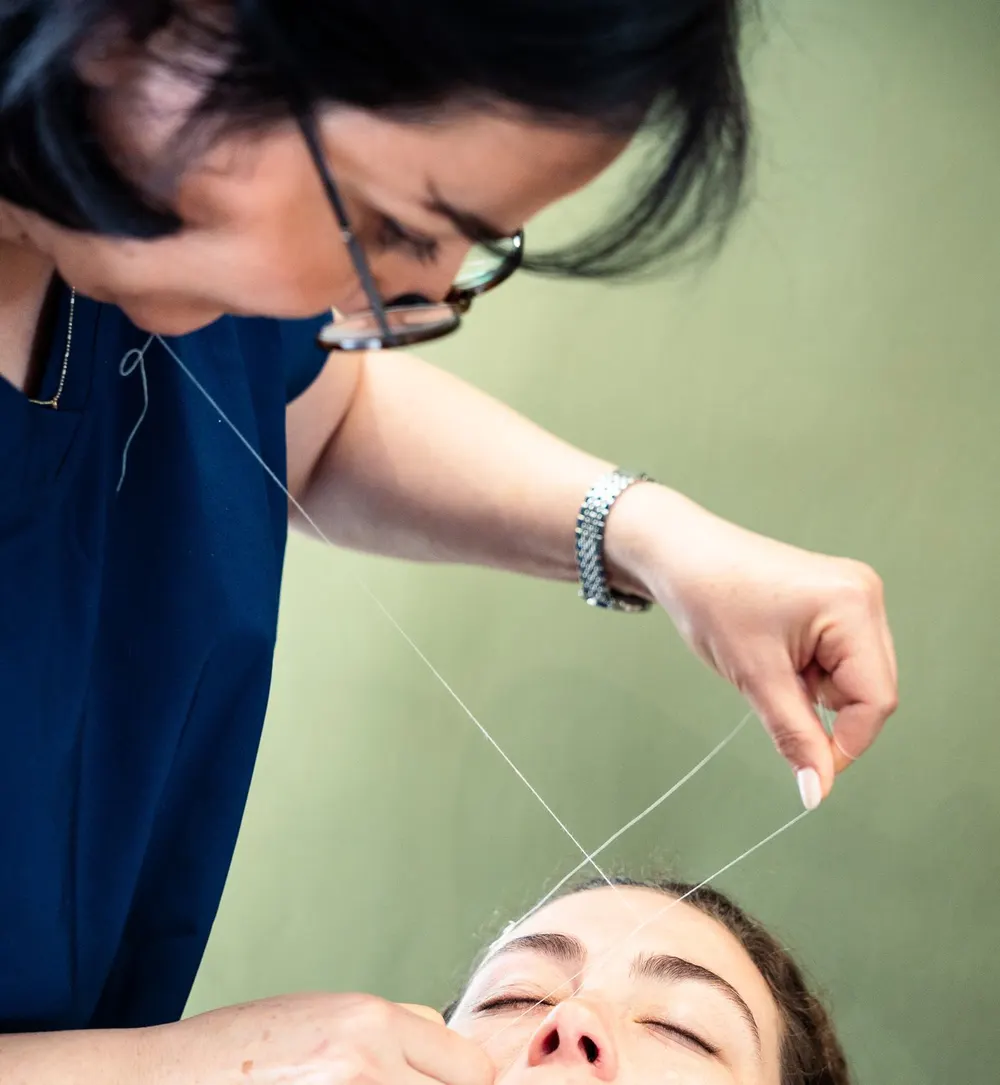
Below is the actual mechanical difference between the two, what each one means if your skin reacts easily, how long the results last, and what should influence your decision beyond simple preference.
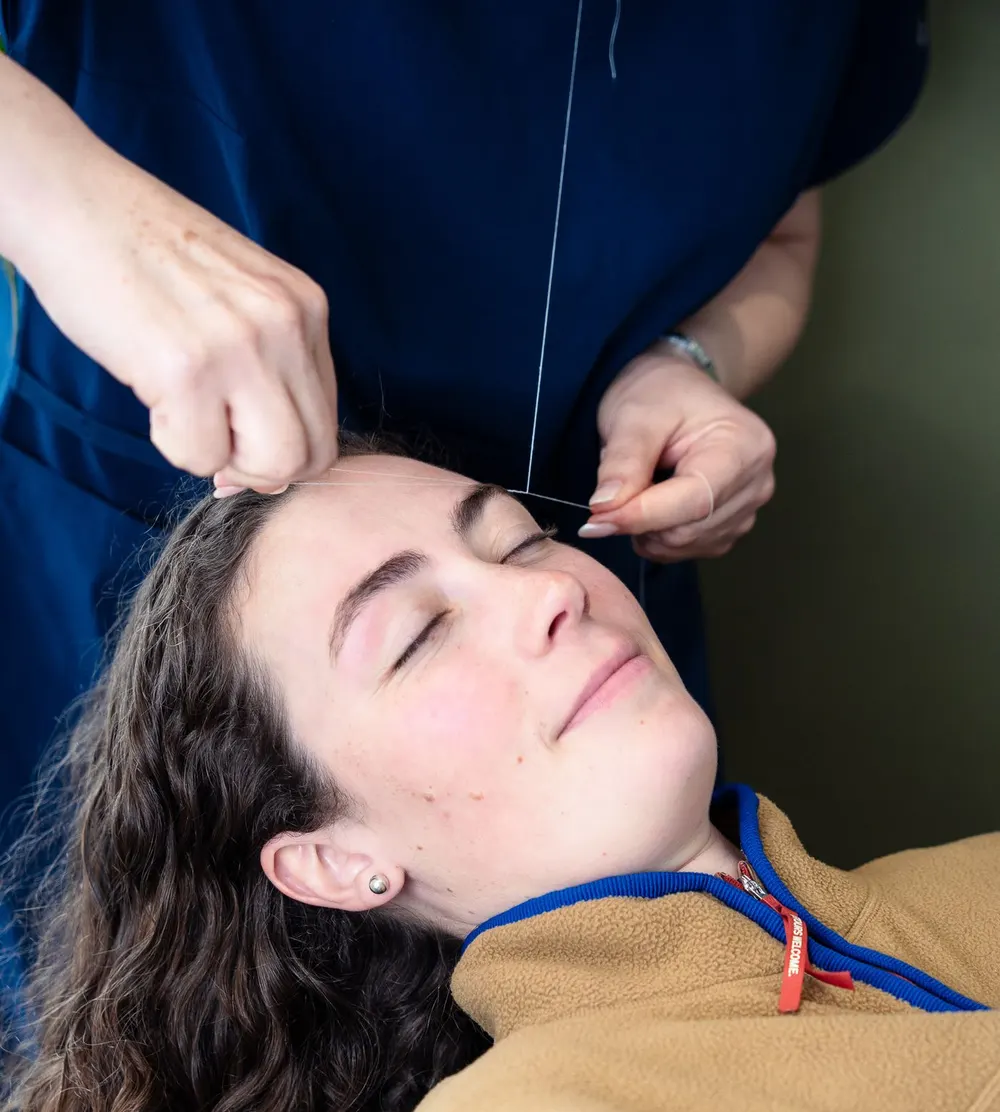
Eyebrow threading vs waxing at a glance
| Threading | Waxing | |
|---|---|---|
| How it works | A twisted cotton thread rolls across the brow and lifts each hair out from the follicle, line by line | Warm wax is applied to a section of hair, then removed in one motion, taking the hairs and a thin layer of skin with it |
| Skin contact | None. No product touches the skin | Direct, and it lifts the outermost layer of skin with the wax |
| Precision | Very high. Fine hairs a wax strip would miss get caught | Lower. A whole section comes away at once, so stray hairs often need tweezing after |
| Typical appointment | A little longer, especially for a full reshape | A few minutes |
| Best suited to | Sensitive or reactive skin, retinoid or acid users, precise brow shaping | Speed, and larger areas where line-by-line precision isn't the point |
| Think twice if | You want the fastest possible appointment | You use topical retinoids or acids, or your skin marks easily |
The retinoid point is worth taking seriously, because it's the one most brow guides skip. Waxing pulls at the top layer of skin, and skin that's already thinned by a retinoid or a strong acid-based routine is more likely to tear, redden or react. Threading touches nothing but the hair itself, so it's the safer choice if you're using tretinoin, adapalene, or a regular AHA or BHA exfoliant on your face.
Is eyebrow threading a good idea?
For most people, yes, and particularly if precision matters more than speed. Because the therapist is working hair by hair rather than clearing a whole strip at once, threading is the better option for correcting an uneven shape, filling in a patchy area without overthinning it, or working close to skin that's sensitive, reactive, or on a retinoid or acid routine. It's also the one to choose if you've had irritation from wax before, since nothing but thread touches the skin.
Brow hair also grows in more directions and at more angles than hair almost anywhere else on the face, which is exactly the kind of irregularity threading handles well. A therapist can follow one stray hair growing sideways without disturbing the ones either side of it, correcting an asymmetry that a wax strip would simply take out along with everything else in its path. That's why threading is often recommended specifically for resetting an overplucked or uneven shape rather than a routine tidy-up.
Where threading matters less is speed and area. It's a facial hair removal method, built for brows, lip and chin, not for legs or larger body areas, and a first full brow reshape can take a little longer than a wax appointment. It's not limited to brows on their own, though: brows, lip and chin combine into one appointment easily, since all three are worked with the same thread and the same technique.
What are the disadvantages of eyebrow threading?
The main one is sensation. Threading pulls hairs out individually and repeatedly along the same line, which for most people feels like a series of short, sharp pinches rather than one strong pull. That's the honest answer to does threading hurt: it can sting more in the moment than waxing, simply because there are more individual tugs instead of one motion, though the discomfort passes quickly and doesn't linger the way a wax burn or reaction can.
The other disadvantages are practical. It takes a trained hand: a rushed or inexperienced therapist can leave an uneven line, since the shape is built hair by hair rather than defined by a wax strip's edge. Some skin shows small pink dots or mild redness straight after, in the same way plucking does, and that usually settles within an hour or two rather than lingering. And because it's a facial-only technique, it isn't an option for eyebrow shaping and a large body area in the same appointment the way waxing sometimes is.
If you're threading before an event, the same rule applies as with most hair removal around the eyes: book it two or three days ahead rather than the same morning, so any mild redness has time to settle and the shape has time to soften.
How long will brow threading last?
Roughly two to four weeks, and the same is true of waxing. Both methods remove the hair from the root, so regrowth depends on your own hair's growth cycle rather than which technique was used. At Skin & Beauty Box, threading is typically rebooked every two to four weeks and waxing every four to five, which reflects how finely hair tends to grow back after each method rather than one being definitively longer-lasting than the other.
How quickly it comes back individually depends on things neither method controls: genetics, hormones, and how coarse the hair was to begin with. Coarser brow hair tends to push through sooner than fine hair, whichever technique removed it. Tweezing the odd stray hair between appointments doesn't extend or shorten that interval either, since it's the follicle's own cycle doing the work, not the removal method. Some people find their hair comes back finer and sparser the more consistently they thread or wax, though that varies from person to person and isn't something either method guarantees.
What is the most natural looking eyebrow treatment?
For shape alone, threading tends to give the most natural result, because the therapist can remove or leave individual hairs rather than committing to a whole section at once. That precision is what makes it easier to keep a brow looking like your own hair, just tidier, rather than obviously reshaped.
If you want more than a tidy-up, our HD Brows treatment is worth a look. It's a structured seven-step service that combines threading, waxing, tweezing and a custom-blended tint around a proper face mapping, built for a fuller, more defined brow rather than just hair removal. That mix is deliberate: threading does the fine, close-in shaping, and waxing clears the bulk of what's left around it quickly, so the appointment gets the precision of one method and the speed of the other rather than a compromise between them. Because it includes a tint step, it needs a patch test up to 48 hours before your appointment, the same as our other tint-based treatments.
Threading or waxing: which should you choose?
Choose threading if precision matters, if your skin is sensitive or reactive, or if you're using a retinoid or acid on your face. It's also the better option if you've had irritation from waxing in the past, or if you want a brow line built hair by hair rather than by a strip's edge.
Choose waxing if speed is the priority, if you're comfortable with the skin contact, and if you'd rather have the shape defined in one motion than several. It also suits combining brows with lip and chin in one appointment. The full waxing treatment page covers what to expect if that's the better fit.
There isn't a universally correct answer here. Plenty of clients switch between the two depending on what their skin is doing that month, and a good therapist will tell you honestly if one isn't right for you on the day.
Book eyebrow threading in Bristol
Threading runs at all three Skin & Beauty Box branches: Clifton Down, Westbury on Trym and Westbury Park, so pick whichever is closer rather than one specific salon. The full threading treatment page has current pricing for brows, lip, chin and full face, and how to book at your nearest salon. Waxing pricing sits on the same price list if you're weighing the two up before you call.
All three salons are cash-free, so card, PayPal or bank transfer all work on the day. If your plans change, just give 24 hours notice and there's no charge for moving the appointment.