Skin tags form where skin rubs against skin, or against clothing and jewellery, over and over. That friction triggers extra growth in the top layer of skin, and a small, benign stalk of tissue (medically, an acrochordon) forms, as Cleveland Clinic's overview of acrochordons confirms. Genetics, ageing, pregnancy, extra weight and insulin resistance all raise the odds, but friction is the mechanism behind almost every case. Having them does not mean you have done anything wrong: they are one of the most common skin growths there is, and most adults get at least one by middle age.
Why do skin tags form?
Friction is the trigger. Everything else on this list makes friction more likely, or more frequent.
| Factor | Why it matters |
|---|---|
| Friction | Skin folding and rubbing against itself, or against a collar, bra strap or necklace, is the direct cause. It is why tags cluster on the neck, underarms, eyelids and groin. |
| Genetics | A family history of skin tags makes you noticeably more likely to develop them yourself. |
| Ageing | Skin loses some of its firmness and elasticity over time, which increases folding in the same spots. |
| Weight | Extra weight creates more skin folds, and more friction, particularly under the arms and around the groin. |
| Pregnancy and hormones | Hormonal shifts, especially during pregnancy, are linked to new skin tag growth. |
| Type 2 diabetes and insulin resistance | Skin tags turn up more often in people with insulin resistance. A sudden crop of them is sometimes worth mentioning at a check-up for that reason. |
None of this makes a skin tag dangerous. It means the skin has folded against itself often enough for a small growth of loose collagen and blood vessels to form.
Skin tag or something else
A genuine skin tag is harmless and stays that way. The real risk is mistaking something else for one: moles, warts and other growths can look similar at a glance, and only a clinician can tell them apart reliably.
If a growth changes in colour, size or shape, starts to bleed, itch or hurt, or you are simply not sure what it is, that is a GP question first, not a salon one. We will never diagnose a lesion for you, and no reputable salon should try. A GP or dermatologist is the right first call whenever something on your skin is changing.
How much does it cost to get a skin tag removed in the UK?
Cost depends on how many tags you have and where you go. Privately, a single skin tag typically runs somewhere in the region of £50 to £150, and most clinics charge a flat session fee that covers one tag or several rather than pricing strictly per tag. If you have a scatter of them, having them all done in one session usually works out cheaper than paying separately.
That is a general market range, not a quote. For current treatments and pricing at Skin & Beauty Box, see our price list.
Do NHS remove skin tags for free?
Not usually. The NHS classes skin tag removal as cosmetic, so it sits outside what GPs provide free of charge, and your GP will usually point you towards paying for removal privately instead.
The exception is a skin tag causing a genuine medical problem: repeated bleeding, snagging badly enough to cause pain, or a location that makes it a real functional issue rather than a cosmetic one. If that applies to you, ask your GP directly whether it qualifies. It is their call, not ours. The NHS's own skin tags page sets out the same position.
Can a GP cut off a skin tag?
A GP can remove a skin tag, but on the NHS they will usually only do it for the medical reasons above rather than for appearance. A GP visit is still worth it for confirming that what you are looking at actually is a skin tag, not a mole or something else that needs a different kind of attention. If they cannot remove it on the NHS, they can point you towards a private option, which is where a clinic comes in.
What naturally kills skin tags?
Nothing you can buy or try at home reliably removes a skin tag, and most of the popular methods do more harm than good.
Tying a tag off with thread or dental floss cuts off its blood supply, but it also risks infection, bleeding and a wound that heals badly, especially in a fold of skin that is hard to keep clean. Over-the-counter wart removal creams are formulated for verrucas, not skin tags, and can burn the healthy skin around the tag rather than the tag itself. Apple cider vinegar has no real evidence behind it for skin tags at all, and applying an acid to skin daily is more likely to cause irritation than results.
The bigger risk sits underneath all of it: if what you are treating at home was never actually a simple skin tag, removing it yourself destroys the one thing a clinician would have wanted to examine first. Cleveland Clinic lists scarring, bleeding, infection and damage to healthy skin among the reasons at-home removal is not considered safe.
Does Boots Pharmacy remove skin tags?
No, Boots does not perform skin tag removal in branch. The shelves stock freezing pens and removal creams for home use, which carry the same risks covered above. A pharmacist can help you decide whether a growth needs a GP appointment, but the removal itself is a clinic or GP procedure, not a pharmacy one.
How Skin & Beauty Box removes skin tags
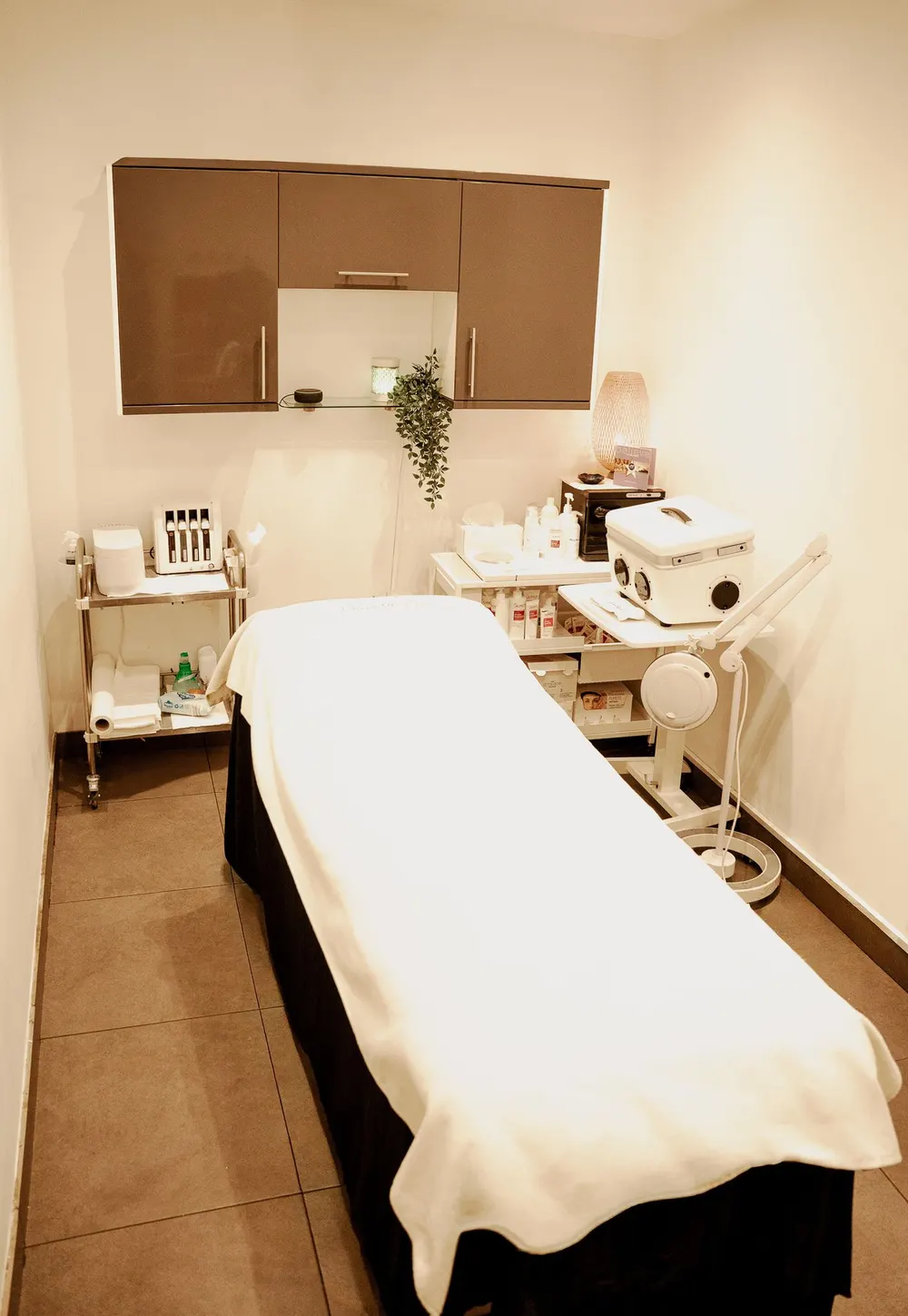
At our Westbury on Trym salon, we use Cryopen: a precision cryotherapy device that freezes a skin tag with a jet accurate to about a millimetre, so the surrounding skin stays untouched. The lesion blackens over the following day, forms a crust, and drops away naturally within one to six weeks depending on size.
We ask the same question a good GP would: get it checked first, and let us confirm it is genuinely a skin tag before you book. Full details of the treatment and aftercare are on the Cryopen treatment page. Cryopen runs at our Westbury on Trym salon only, 16 High Street, BS9 3DU, so if you are coming from Clifton Down or Westbury Park, that is the branch to book.
Quick answers
How much does it cost to get a skin tag removed in the UK? Privately, expect somewhere around £50 to £150 for a single tag, often less per tag if you have several done in one session. See our price list for current figures.
Do NHS remove skin tags for free? Not for cosmetic reasons. It is only free if the tag is causing a genuine medical problem, and that is a GP's call to make.
Can a GP cut off a skin tag? Yes, but usually only when there is a medical reason. For cosmetic removal, they will typically point you to a private clinic.
What naturally kills skin tags? Nothing reliably. Thread-tying, wart creams and apple cider vinegar all carry a real risk of infection, scarring or burning healthy skin, and there is no proof any of them work.
Does Boots Pharmacy remove skin tags? No. Boots sells home removal kits but does not remove skin tags in branch.