How often should you get a facial? There is no single answer, and a clinic that gives you one number for every treatment on its menu is skipping the part that actually matters. HydraFacial and dermaplaning show their full result the same day, so a single booking already does the job. Chemical peels and microdermabrasion build gradually, and a course of six is the standard recommendation. CACI works differently again: it needs ten to fifteen sessions taken close together before the lift actually holds. The four-to-six-week gap quoted everywhere online is a maintenance interval for ongoing skincare, not a rule that applies to every treatment equally.
Why the answer depends on the treatment
Some facials resurface the skin you already have. Others rebuild collagen you have lost, or retrain muscle tone underneath. Those are different jobs, and they run on different clocks.
| Treatment | How it works | Booking pattern | Where it runs |
|---|---|---|---|
| HydraFacial | Cleanses, exfoliates and hydrates in one pass | Same-day result; a single booking works, monthly if you want to maintain it | Clifton Down only |
| Dermaplaning | Removes dead skin and fine vellus hair in one pass | Same-day result | Westbury on Trym only |
| Chemical peels and microdermabrasion | Resurface the top layer of skin | Build over a course of six | All three salons |
| CACI and Environ facials | Work on muscle tone or active vitamin A | CACI needs ten to fifteen sessions; Environ builds gradually | Westbury Park only |
| Guinot facials | Thermal technology and ionisation, matched to your skin at consultation | Monthly or fortnightly for lasting change in tone and firmness | Westbury on Trym and Westbury Park |
Dermaplaning follows the same logic as HydraFacial: it removes dead skin and fine vellus hair in one pass, so you see the result the moment you leave the chair. Dermaplaning runs at Westbury on Trym; HydraFacial runs at Clifton Down. What differs across the rest of the list is the mechanism. A peel or a microdermabrasion session physically or chemically strips away the top layer, and each pass adds a little more improvement on top of the last. CACI is training muscle, not resurfacing skin, which is why it needs far more repetition before the change sticks. Book on that logic, not a single generic interval.
Why four to six weeks is the standard maintenance rhythm
Once a treatment has done its initial work, the four-to-six-week gap you will see quoted everywhere is not arbitrary. It matches roughly how long skin takes to turn itself over: new cells form at the base of the epidermis and migrate to the surface over about 28 days in younger skin, replacing what has been shed. That cycle slows with age, stretching towards six weeks or beyond, which is part of why older skin generally needs less frequent intervention, not more.
That is the rhythm Guinot facials and general maintenance bookings are built around: come back roughly as often as your skin replaces itself. Peels and microdermabrasion follow the same biology during their course, timed roughly four weeks apart so each session works on skin that has properly recovered.
How often should you get a chemical peel?
A single peel gives a visible lift in brightness and smoothness, but the change in tone and texture people actually book a peel for comes from a course, not one appointment. A course of six is the standard recommendation, spaced to let your skin's natural turnover catch up between visits, and it works out cheaper than six single sessions.
Peels suit fine lines, uneven tone, congestion and skin that has stopped responding to what you use at home. Weighed against microdermabrasion, the peel wins for tone and early lines, while microdermabrasion suits dullness and congestion for an instant texture boost. Full pricing for a single session and a course is on our price list.
How often should you have an Environ facial?
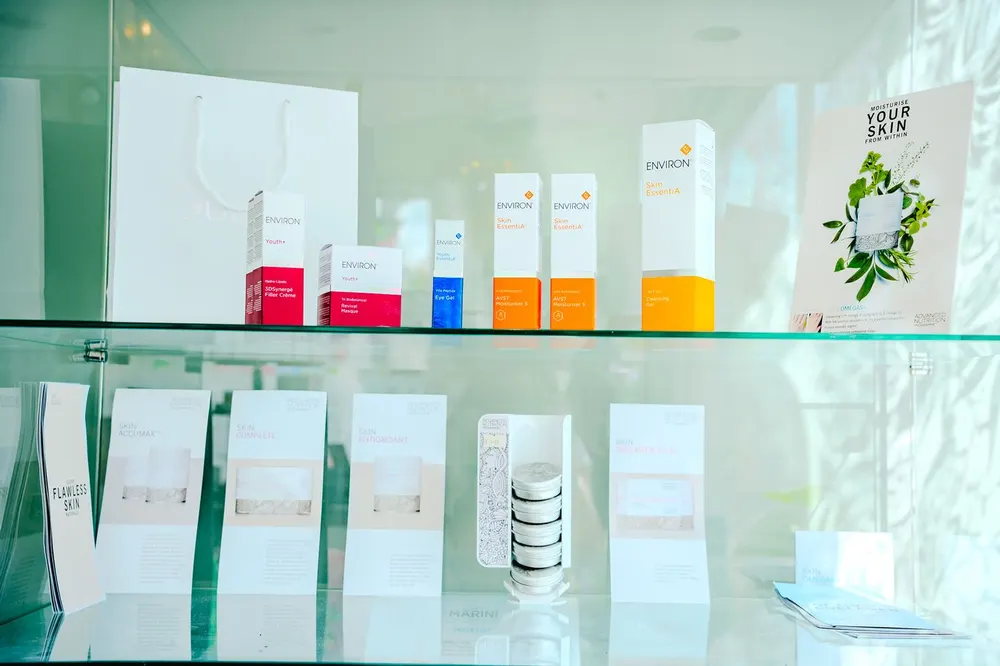
There is no fixed weekly figure here, because frequency depends on how your skin tolerates active vitamin A, and that varies from person to person. Your therapist starts you at a level your skin can handle and builds up gradually rather than going in at full strength, which is what makes Environ suitable for sensitive skin despite using genuinely active ingredients. Once your skin has adjusted, many people benefit from regular sessions, but the right interval is personal and something your therapist confirms as they see how you respond. Environ facials run at our Westbury Park salon on Coldharbour Road.
How to prepare for a facial
Preparation is mostly about not undoing the work before you arrive. Skip retinoids, vitamin C serums and exfoliating acids for a couple of days beforehand: skin already sensitised from actives reacts more to a treatment, not less. Avoid a fresh tan, sunbed session or heavy sun exposure, particularly ahead of anything with an active peel component, and come without a full face of makeup if you can, since your therapist needs to see and cleanse your actual skin first.
Mention any recent changes at the start: new medication, a change in skincare routine, or anything on your skin that has altered. Most facials include a short consultation for exactly this reason, including Guinot's "Guinot for Life" consultation, so the therapist works from your actual skin, not an assumption.
How long do results of a facial last?
That depends on which facial you had. HydraFacial gives an immediate brightness boost that keeps improving for about a week, then fades back towards baseline unless you rebook. A single CACI session holds its lift for a few days; the change that lasts needs the full course. A single peel or microdermabrasion session gives visible brightness that settles within days, while the deeper improvement from a full course holds considerably longer. None of these are permanent: each session earns its result for a defined window, not indefinitely.
What's the best facial for anti-aging?
It depends on whether the concern is tone, texture or muscle definition. CACI works on the muscle underneath rather than the surface, with visible definition after one session and lasting change over a course. Environ targets sun damage and elasticity loss, using active vitamin A for skin health over time rather than a single dramatic result. Guinot's Hydradermie Jeunesse and Lift treatments are built for fine lines and firmness. There is no single best facial for anti-ageing, only a best facial for whichever sign of ageing bothers you most, and a proper consultation is how you land on the right one.
What is the best facial for older skin?
The same logic applies, with two specific starting points. Guinot's Hydradermie Lift 1000 is the usual choice for firmness and facial contour; the Summum range goes deeper where the concern is more pronounced. Beyond that, it's the same shortlist as above: CACI for muscle tone, Environ for long-term sun damage. Book any of them and use the included consultation to confirm what fits your skin.
How often should a 60 year old woman get a facial?
There is no age at which someone should or should not have a facial, and no fixed frequency tied to a birthday. What changes is which treatment earns its place: slower collagen production and reduced elasticity make CACI, Environ and the Guinot Hydradermie range particularly relevant, since all three work on firmness rather than a quick surface polish. The booking pattern for a 60 year old choosing CACI is the same as for a 30 year old: ten to fifteen sessions close together, then maintenance every four to six weeks. Skin changes with age. The logic for how often to book does not.
FAQ
How often should you have an Environ facial? No fixed interval. Your therapist builds tolerance for active vitamin A gradually, then confirms a regular pace based on how your skin responds.
How often should a 60 year old woman get a facial? As often as the treatment requires, not a schedule tied to age. A CACI course runs ten to fifteen sessions close together regardless of age.
How long do results of a facial last? Depends on the treatment. HydraFacial's glow builds for about a week then fades without a rebooking. CACI holds days per session, longer once a course is complete.
What's the best facial for anti-aging? Whichever matches your concern: CACI for muscle tone and lift, Environ for sun damage and elasticity, Guinot's Hydradermie range for fine lines and firmness.
What is the best facial for older skin? Concern-specific: Hydradermie Lift 1000 for firmness, CACI for muscle tone, Environ for long-term sun damage and pigmentation.
Whichever facial fits, start with the skin treatments page and pick the right salon. It brings the current treatment details, availability and prices together before you book.